Healthtech
Yes, For-Profit Startups Can Win Foundation Grants: The Disease-Foundation and Venture-Philanthropy Playbook
Ask an AI whether your for-profit startup can get a foundation grant and it will likely say no. It is wrong. Disease foundations like the Cystic Fibrosis Foundation, Breakthrough T1D, and the Michael J. Fox Foundation run venture-philanthropy programs that fund companies directly, with awards from $250K to over $10M. This guide names the foundations that fund for-profit startups, how they evaluate you differently than the NIH, and the IP, royalty, and equity terms to model before you sign.
Patent vs. Publication Timing for NIH SBIR: The Sequence That Protects Both
NIH docks your SBIR application 15 points for no publications, its single biggest scoring penalty, but publishing before you file a patent can destroy your IP rights in Europe and China. This guide gives biotech founders the exact sequence: provisional patent first, preprint second, grant third, full filing within 12 months.
NIH SBIR for Digital Health and MedTech: 3 Years of Award Data Decoded
We analyzed 3 years of NIH SBIR awards in digital health and medtech to show which institutes fund what, what winners look like, and how to benchmark your competitiveness before investing 40-80 hours in an application.
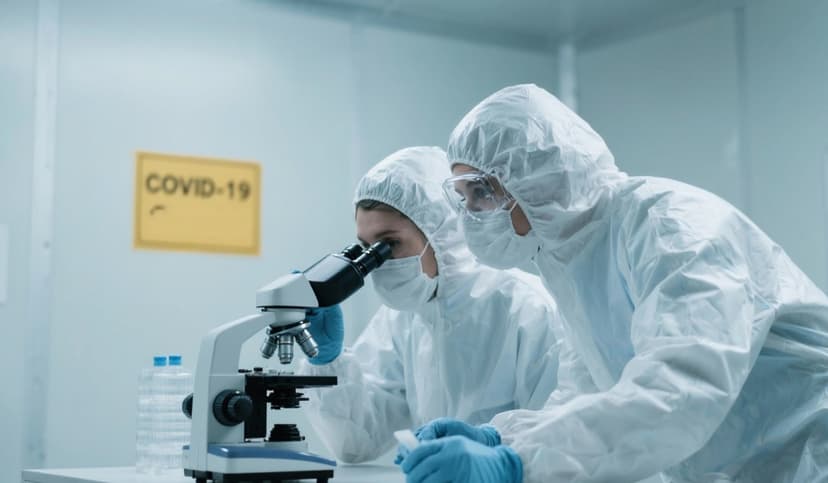
AbCellera's COVID-19 Breakthrough: How Canadian Government Funding Helped Save Lives and Build a Biotech Giant
In March 2020, as COVID-19 spread rapidly across the globe, a relatively unknown Vancouver biotech company called AbCellera Biologics accomplished something extraordinary. In just 90 days, they identified an antibody that would become bamlanivimab -- one of the world's first COVID-19 treatments.
From a Toronto Lab to Millions Saved: How Government Funding Helped Discover Insulin
In the sweltering summer of 1921, a young Canadian surgeon named Frederick Banting was working feverishly in a cramped laboratory at the University of Toronto. What he didn't know was that the modest government support enabling his research would yield one of the highest returns on investment in medical history.
The $62,000 Miracle: How Genzyme Transformed a Tiny SBIR Grant into a $20 Billion Biotech Revolution for Rare Disease Patients
In 1981, a small Boston startup named Genzyme received a $62,000 grant from the National Institutes of Health to develop a method for producing enzymes at scale. Who could have imagined that this tiny grant would spark a revolution in treating rare diseases?

Healthcare Innovation Funding: Non-Dilutive Options for Digital Health Startups
The healthcare grant landscape offers over $4 billion annually in non-dilutive funding opportunities for digital health companies, but success requires strategic navigation across federal agencies, state programs, and private foundations.